How Compression Socks May Help Foot Pain
Understanding circulation, fluid buildup, and how graduated compression therapy supports leg and foot wellness.
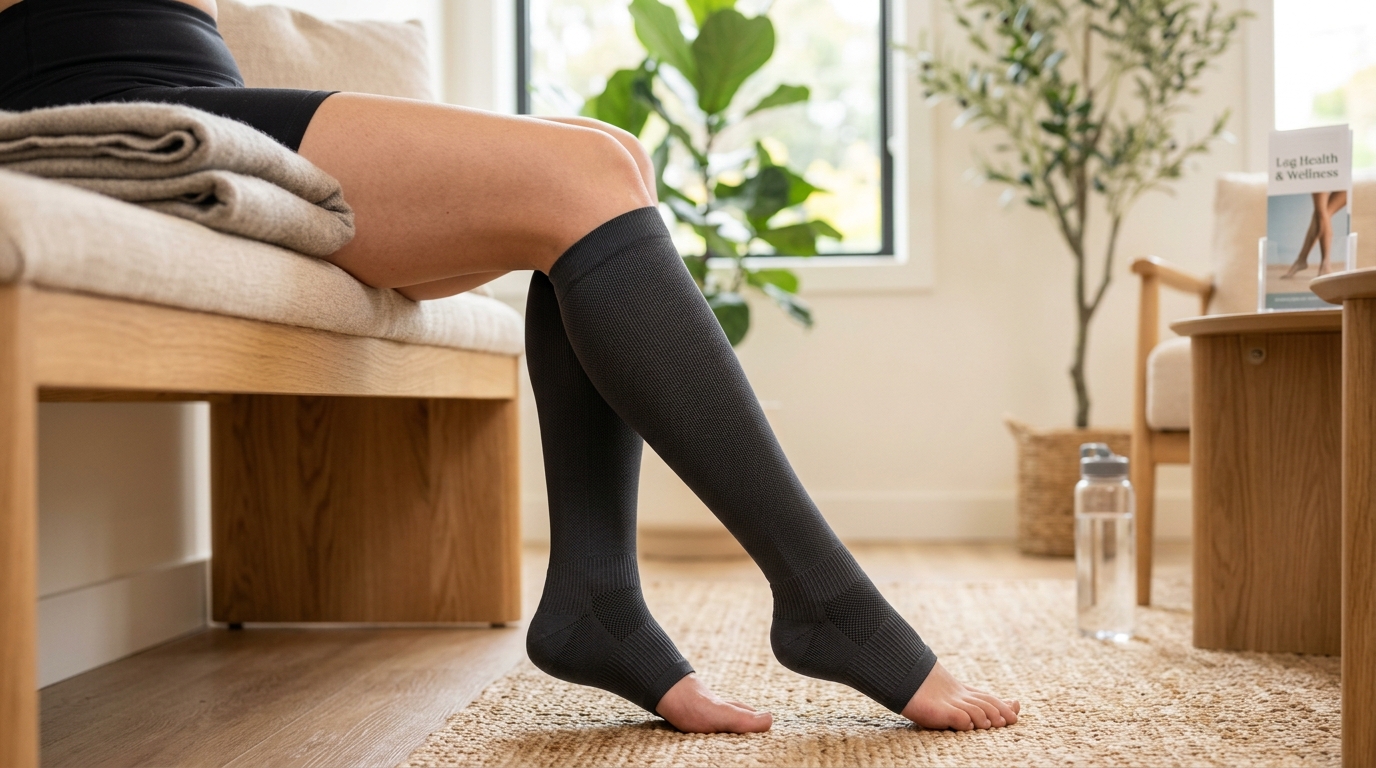
Not every cause of foot pain responds to compression. What compression addresses well are conditions tied to swelling, fluid buildup, and circulation: swollen feet and ankles, leg fatigue from prolonged standing, mild venous insufficiency, pregnancy-related swelling, and discomfort from long travel days where you spend hours in a fixed position.
The aching and heaviness many people feel in their feet comes from poor circulation and fluid accumulating in the tissue. Better blood flow reduces both. Compression socks are not a cure, but for the right conditions, they work.
Conditions That May Benefit from Compression
Chronic Venous Insufficiency
When leg veins struggle to push blood back against gravity, fluid backs up. Swelling, aching, and varicose veins follow. The clinical evidence here is solid: a study of 112 patients with chronic venous insufficiency found statistically significant improvement (p < 0.001) in lower-extremity swelling, pain, and activity tolerance after both one and sixteen months of wearing graduated compression stockings. Compression is a standard first-line tool for this condition, not a last resort.
Varicose Veins
Graduated compression helps reduce the discomfort associated with enlarged veins while supporting healthier circulation. A randomized controlled trial found that class I compression stockings produced overall improvement in pain, leg swelling, and leg heaviness in patients with uncomplicated varicose veins.
Lymphedema
Post-mastectomy patients frequently develop lymphedema because lymph nodes have been removed or damaged during cancer treatment. Shar's Medical Supplies works directly with the IU Health Simon Cancer Center's oncology team and provides private, one-on-one fittings for compression sleeves and garments designed for cancer-related lymphedema. For all lymphedema cases, garment type, compression level, and fit should be confirmed with your care team first.
Pregnancy
Foot and ankle swelling is common, particularly during the third trimester. Many providers recommend mild compression during pregnancy to improve comfort and reduce swelling. Get clearance from your provider first.
High-Demand Occupations
Nurses, teachers, warehouse employees, restaurant staff, and anyone else spending most of a shift on their feet know what end-of-day leg fatigue feels like. A study of workers on 12-hour standing shifts found significant muscle fatigue, edema, and discomfort in those wearing regular socks, while workers wearing compression stockings showed no significant change in any of those measures.
Travel
A systematic review assessing more than 2,000 airline passengers across eight clinical trials found high-quality evidence that graduated compression stockings prevent swelling during flights lasting more than three hours. If you travel frequently for work or leisure, this is one of the easier preventive measures available.
Can Compression Socks Help Plantar Fasciitis?
Compression socks are not a treatment for plantar fasciitis. However, they may reduce surrounding inflammation and provide gentle arch support, making symptoms more manageable between treatments. They work best alongside stretching exercises, supportive footwear, and any treatment plan recommended by your healthcare provider.
⚠️ Compression Socks and Diabetes
Do not begin wearing compression socks if you have diabetes without first consulting your healthcare provider.
Diabetes can affect circulation and reduce sensation in the feet, making an improper fit potentially dangerous. Wearing the wrong compression level may cause pressure injuries without the usual warning signs.
If you have diabetes and notice foot pain, numbness, changes in skin color, or a wound that is slow to heal, seek medical care promptly.
Choosing the Right Compression Level
Compression is measured in millimeters of mercury (mmHg). Higher numbers indicate more pressure, but more pressure is not necessarily better.
Mild (8 to 15 mmHg)
Ideal for:
- Everyday comfort
- Tired legs
- Minor swelling
Moderate (15 to 20 mmHg)
Often recommended for:
- Long work shifts
- Air travel
- Mild swelling
- Early varicose veins
Firm (20 to 30 mmHg)
Commonly used for:
- Moderate venous insufficiency
- Significant swelling
- Recovery post-procedure
*Higher compression levels (20-30 mmHg and above) should generally be used under the guidance of a healthcare provider.
Getting the Right Fit Matters
Shoe size alone does not determine compression sock size. Proper fitting requires measurements of your ankle circumference, calf circumference, and sometimes leg length.
A correctly fitted compression garment should feel supportive throughout the day. If you experience numbness, deep pressure marks, pain, or skin discoloration, remove the garment and have your measurements checked.
When Compression Socks May Not Be Appropriate
Compression therapy is not appropriate for everyone. Talk with your healthcare provider before wearing compression socks if you have:
- Severe peripheral arterial disease
- Significant circulation disorders
- Certain heart conditions
- Active skin infections
- Open wounds unless specifically instructed by your healthcare provider
If pain, numbness, tingling, or changes in skin color develop while wearing compression garments, remove them and contact your healthcare provider.
Tips for Wearing Compression Socks
- Put them on early: Put them on before swelling begins, usually first thing in the morning.
- Smooth out wrinkles: Smooth out wrinkles to avoid concentrated pressure points.
- Care instructions: Follow the manufacturer's washing instructions to maintain elasticity.
- Replace worn garments: Replace compression garments when they lose elasticity, since worn-out garments no longer provide the intended compression level.
Frequently Asked Questions
Can I wear compression socks all day?
Most people wear compression socks during waking hours and remove them before bed unless their healthcare provider recommends otherwise.
Does insurance cover compression garments?
Coverage depends on your diagnosis, your insurance plan, and the type of compression garment prescribed. Shar's Medical Supplies works with Medicare, Indiana Medicaid, the VA, Anthem, Aetna, and many other insurance plans. Our team can help verify your benefits before your fitting.
Do I need a prescription?
Lower compression levels are generally available over the counter. Higher compression levels may require a prescription, and some insurance plans require one for reimbursement.
Can compression socks cure foot pain?
No. Compression socks help manage certain causes of foot discomfort, but they are not a cure. Persistent or worsening pain should always be evaluated by a healthcare professional.
Can compression socks help swollen feet?
Yes. Compression therapy is a well-established treatment for swelling caused by venous insufficiency, prolonged standing, travel, pregnancy, and certain medical conditions.
Visit Shar's Medical Supplies
Choosing compression socks based solely on what is available on the shelf is one of the most common reasons they fail to provide relief. Proper measurements and the correct compression level make a significant difference.
Our experienced team provides professional compression garment fittings for patients throughout Indianapolis and the surrounding communities. As a BOC-accredited, veteran-owned medical supply provider, Shar's Medical Supplies serves patients across Indiana, Ohio, and Michigan with personalized fittings, physician coordination, and insurance verification.
Whether you need compression socks for work, travel, circulation concerns, or a physician-prescribed compression garment, we are here to help you find the right solution.
Book a Private Compression Fitting
Visit sharsmedicalsupply.com or call (317) 652-6300 to schedule an appointment with our fitting specialists.
References
- Ibegbuna V, et al. "Evaluation of therapeutic compression stockings in the treatment of chronic venous insufficiency." PubMed. pubmed.ncbi.nlm.nih.gov/10037516
- Panni et al. "Efficacy of medical compression stockings class I on the reduction of symptoms in patients with uncomplicated varicose veins." Vasa, 2025. econtent.hogrefe.com/doi/10.1024/0301-1526/a001163
- Garcia MG, et al. "Comparison of Physiological Effects Induced by Two Compression Stockings and Regular Socks During Prolonged Standing Work." Human Factors, 2023. pubmed.ncbi.nlm.nih.gov/34078143
- Urbano F, et al. "Graduated compression stockings as a prophylactic measure in venous thromboembolism and edema triggered by air travel." PMC, 2021. ncbi.nlm.nih.gov/pmc/articles/PMC8147891
- Wittens C, et al. "Indications for medical compression stockings in venous and lymphatic disorders: An evidence-based consensus statement." PMC, 2018. ncbi.nlm.nih.gov/pmc/articles/PMC5846867
- American Diabetes Association. Standards of Medical Care in Diabetes. diabetes.org